Trump’s Venezuela operation marks a move towards ‘Donroeism’ as the United States seeks to assert dominance over the Western Hemisphere. While this shift may create strategic space for China by reducing the likelihood of direct US–China confrontation, it is unlikely to directly trigger Chinese military action over Taiwan. Instead, a key determinant will be the credibility of the US response to a Taiwan contingency — which appears increasingly uncertain. While Japan remains dependent on the United States for its security, it could bolster regional stability by pursuing a more autonomous diplomatic strategy that strengthens key partnerships across Asia.
The US military operation in Venezuela on 3 January 2026 was a shocking development. Despite Washington’s claim that it was a law enforcement measure against drug trafficking, the action was a clear violation of international law. Importantly, it directly contradicts a principle frequently invoked by both Washington and its Western allies — that changes to the status quo by force are unacceptable.
The shock did not end there, with US President Donald Trump making concrete moves towards acquiring Greenland. Though he has now backed away, on 17 January, he announced the imposition of retributory tariffs on Denmark and seven other European countries that opposed his designs for Greenland.
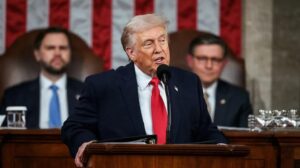
The speed and radical nature of these actions are striking, and with Trump’s approval ratings declining ahead of the November midterm elections, his sense of urgency may be growing. Trump has declared that the only constraint on his power is not international law, but his own morality.
The new US National Security Strategy has been labelled ‘Donroeism’ — a Trump-era reinterpretation of the 19th century Monroe Doctrine. Under Donroeism, the United States prioritises the Western Hemisphere, seeking to establish dominance and eliminate perceived threats such as drug trafficking, illegal immigration and the influence of Russia and China across the Americas.
This approach raises serious concerns that the post–World War II security architecture — based on collective defence through NATO in Europe and a network of bilateral alliances in East Asia — faces a fundamental transformation. Indeed, Trump’s long-threatened withdrawal from NATO may become a real possibility.
In East Asia, US policy towards China also appears to be evolving. Since around 2010, when China emerged as the world’s second-largest economy, Washington has treated Beijing as its sole global competitor, seeking to contain it through alliance-building under the ‘Indo-Pacific Strategy’.
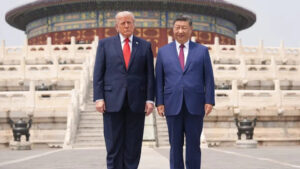
But signs of adjustment have emerged. On the sidelines of the APEC summit in late October 2025, Trump and Chinese President Xi Jinping avoided discussions over Taiwan while agreeing to implement a one-year truce in the trade war and conduct reciprocal state visits in 2026. Trump has also repeatedly referenced a ‘G2’ framework, implicitly elevating China’s global status and suggesting that as Washington shifts strategic focus to the Western Hemisphere, it is seeking to avoid direct confrontation with Beijing.
For Beijing, maintaining economic stability and a steady US–China relationship is paramount. With sluggish domestic consumption and real GDP growth around 5 per cent in 2025, avoiding a renewed trade war is critical. In this context, the trade truce and summit diplomacy represent positive developments for the Xi administration.
Some have argued that the US attack on Venezuela might embolden China to take military action against Taiwan. As Xi nears the end of his third term, achieving reunification with Taiwan is expected to become his defining political objective. Yet this interpretation is misguided. Whereas the Venezuela operation clearly involved a violation of another state’s sovereignty, Beijing regards Taiwan as a purely internal matter.
China is likely to pursue reunification on its own terms and schedule, applying political pressure through the Kuomintang and other local actors, conducting military exercises in the Taiwan Strait and steadily expanding its military capabilities.
The decisive variable will be the US response. Under Donroeism, many observers believe that the likelihood of US military intervention in a Taiwan contingency is diminishing.
Japan faces a dilemma that parallels Europe’s bid for strategic independence. Surrounded by nuclear-armed China and Russia, as well as nuclear-capable North Korea, Japan cannot realistically abandon reliance on the US nuclear umbrella. The political and economic costs of pursuing an independent nuclear deterrent are prohibitive.
Yet unconditional alignment with Washington may at times conflict with Japan’s national interests. Rather than merely following the United States’ lead, Japan should aspire to be an ally capable of shaping US behaviour.
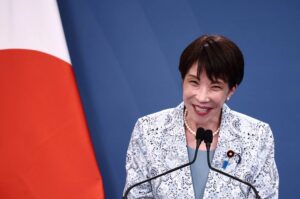
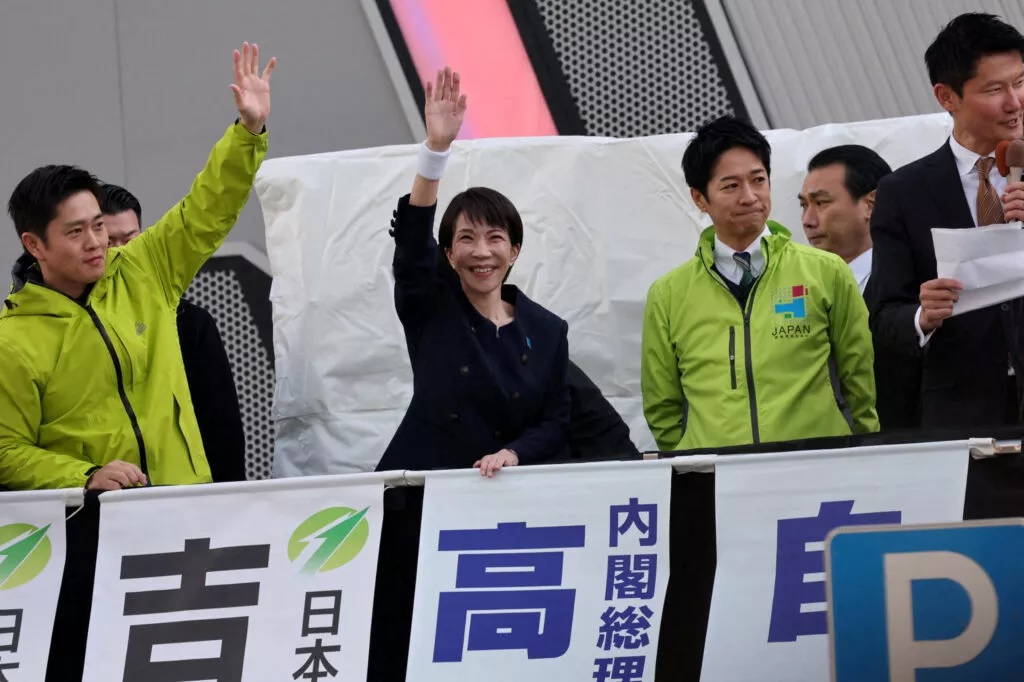
The key lies in developing an autonomous diplomatic strategy in Asia. Even without US participation, Japan should work to expand the CPTPP to include China and South Korea, establish regional confidence-building frameworks and strengthen partnerships with South Korea, Australia, the ASEAN states and India. Constructive engagement with China will also be essential to maintaining regional stability. But Japan–China relations remain fraught with tension. Despite her conservative reputation, Japanese Prime Minister Sanae Takaichi initially adopted a conciliatory approach, even securing a bilateral meeting with Xi at APEC. Yet immediately after the summit, Takaichi publicised her meeting with Taiwan’s APEC representative on social media. She later stated in the Diet that a Taiwan contingency could constitute a ‘survival-threatening situation’, implying that Japan might exercise collective self-defence in support of the United States.
China perceived these actions as a diplomatic affront to Xi and responded with retaliatory measures — discouraging travel to Japan, halting seafood imports and imposing export controls on dual-use items and rare earths.
Yet Takaichi has refused to retract her remarks and — given that Taiwan is regarded by Beijing as its ‘core interest of core interests’ — prospects for improved Japan–China relations in the near term remain bleak.
Trump’s Donroeism is reshaping not only the Western Hemisphere but also the foundations of the European and East Asian order. Japan cannot rely on alignment with the United States alone. Rather, pursuing a more autonomous, Asia-centred diplomacy will better position Japan to navigate an increasingly unstable international environment.
Hitoshi Tanaka is special adviser at the Institute for International Strategy at the Japan Research Institute, Ltd. He was also previously chairman of the Institute for International Strategy.