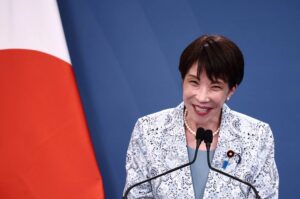
In Brief. Japan’s February 2026 snap election reflects a political system increasingly shaped by tactical dissolutions rather than policy performance. While Takaichi’s high approval ratings explain their timing, frequent elections have entrenched perpetual campaigning, weakened democratic accountability and encouraged populist spending. Agendas like Sanaenomics risk failing if institutional instability continues to prevent sustained reform and long-term policy implementation. Japan’s general election has been called for 8 February 2026, just months after Prime Minister Sanae Takaichi took office in October 2025. While Takaichi’s remarkably high cabinet approval ratings provide the tactical rationale, this move underscores a problematic trend in Japanese politics in which political survival takes priority over substantive policy outcomes.
Calling an election immediately after taking office under favourable conditions has long been a Liberal Democratic Party practice, refined by former prime minister Shinzo Abe into a strategic weapon now termed the ‘Abe style’ of dissolution.
Takaichi has wielded the prime ministerial dissolution power as a potent weapon. By calling an election during her honeymoon period, she seeks to secure a stable majority and reduce dependence on smaller coalition partners like Nihon Ishin no Kai. Yet this tactical dexterity masks a deeper institutional pathology in Japanese politics.
The more fundamental problem in Japanese politics is that there are too many elections. National elections have been held almost every one or two years over the past decade, with four House of Councillors elections contesting half the seats and three House of Representatives elections triggered by prime ministerial dissolutions.
This state of perpetual election campaigning creates a vicious cycle. Whenever the government attempts necessary but unpopular reforms like fiscal consolidation or deregulation, the next election looms. To avoid electoral backlash, administrations revert to populist spending and popularity-boosting policies. This was seen in the 2017 House of Representatives election, when Abe pledged to redirect consumption tax revenues earmarked for fiscal reconstruction and social security to fund a ‘free education’ scheme.
The United Kingdom offers a fruitful comparison. The Fixed-Term Parliaments Act 2011 attempted to institutionalise stability by restricting prime ministerial dissolution powers. This constraint enabled the 2010–15 administration to focus on a five-year program of fiscal austerity, ensuring that voters evaluated the government on actual policy outcomes in the 2015 election. Although the Act was repealed in 2022, the episode remains a clear illustration of how institutional predictability can shift the democratic focus from promise to performance.
In Japan, the high frequency of elections has transformed democratic scrutiny from assessing policy outcomes to judging political expectations. Voters are called to the polls before policies have time to take effect, turning elections into referendums on the ‘freshness’ of new leaders and the political promise they offer, rather than actual performance. Former prime minister Shigeru Ishiba lost popular support on economic policy but never faced an electoral reckoning, with public opinion conveniently reset by Takaichi. Voters are once again being asked to vote not on what the government has achieved, but on what it might do.
This perpetual cycle of campaigning contributes to extremely low voter turnout, a feature of Japan’s chronic political malaise. When elections are triggered by tactical calculations rather than substantive policy outcomes, voters increasingly perceive them as products of internal party manoeuvring rather than an important democratic cornerstone.
Takaichi enters the upcoming election with a ¥21 trillion (US$135 billion) economic stimulus package as the core of her government’s economic agenda. The policy, dubbed ‘Sanaenomics’, is intended to combat rising prices. But from a macroeconomic perspective, fiscal expansion on this scale is likely to fuel further inflation. By flooding the market with electronic coupons and cash handouts, the government risks accelerating the depreciation of the yen and driving up the cost of imports. While politically popular, such measures do little to address the structural weaknesses of the Japanese economy.
To Takaichi’s credit, Sanaenomics does improve on its predecessor, ‘Abenomics’. Whereas Abenomics was often criticised as a ‘one-legged policy’ solely reliant on monetary easing, Takaichi has articulated a more robust growth strategy. The 17-point plan, centred on artificial intelligence, semiconductors, quantum computing and space exploration, signals an intent to foster new industries rather than merely prolonging the life of declining ones.
But the strategy’s success requires long-term commitment and a political resolve to dismantle foundational regulations, which are often compromised by repeated election cycles. Unfortunately, Takaichi has been unable to resist dissolving the Diet for a general election to consolidate her power base.
Japan’s political climate increasingly resembles a ‘heroine cult’, with heightened public expectations obscuring critical scrutiny of economic policies. While Takaichi is poised to secure the political legitimacy she seeks in the February election, a victory built on expectations will rest on fragile foundations.
For Japan to escape prolonged stagnation, it must break free from a democracy of perpetual campaigning. Institutional reforms must be undertaken to enable stable, results-oriented governance. Until voters begin judging governments on policy outcomes and prime ministerial dissolution powers are curbed, Japan will remain trapped in a vicious cycle of populist expectations and deferred structural reform.
Masato Kamikubo is Professor at Graduate School of Policy Science, Ritsumeikan University, Japan.