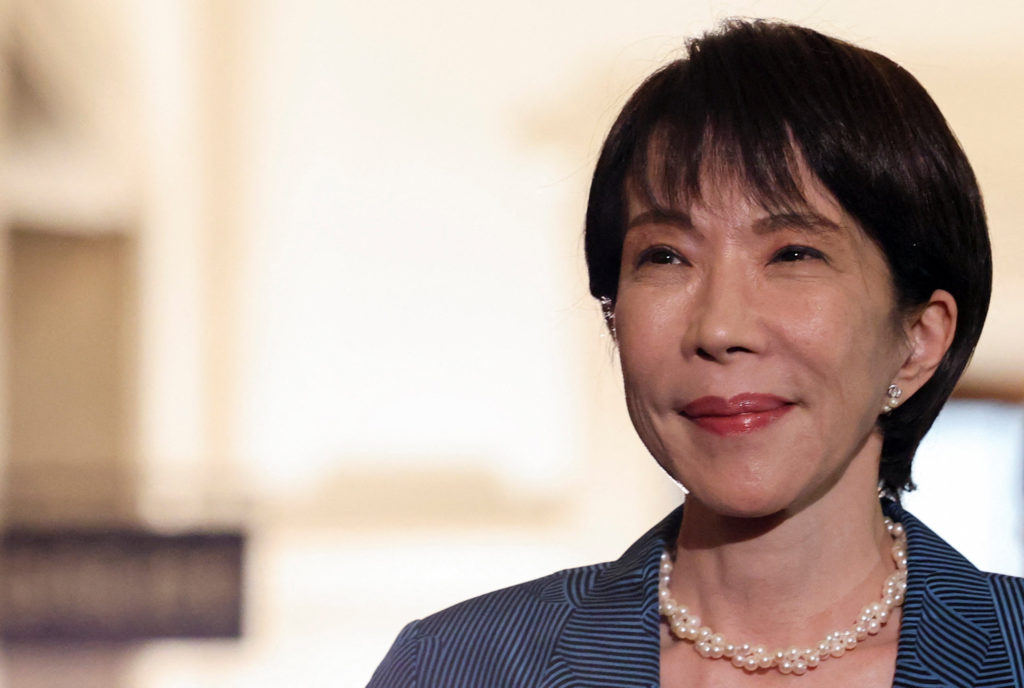
Sanae Takaichi led Japan’s Liberal Democratic Party to a historic landslide victory in February 2026, rebranding it as a modern, youth-friendly force and capitalising on her image as Japan’s first female prime minister — even as scandals and coalition ruptures had recently left the party vulnerable. Her mandate rests more on personal appeal and nationalist positioning than on a detailed policy program, with younger voters backing an image of change rather than a coherent reform agenda. Yet significant uncertainty surrounds her fiscal strategy, which risks deepening stagflation, and her hawkish security posture, which could unsettle regional stability if it pushes Japan towards constitutional revision or accelerated rearmament.
Four months ago, Japanese Prime Minister Sanae Takaichi inherited a political party in crisis. On 8 February 2026, she led Japan’s ruling Liberal Democratic Party to a thumping victory that was not just a dramatic comeback but a record-breaking electoral reversal. Winning 316 out of 465 seats, the LDP secured the largest seat total by a single party in post-war Japan’s parliamentary history.
Given that the LDP has governed Japan for 66 of the past 70 years — a record of dominance unmatched in any other democracy — it’s easy to forget its precarious position since 2022, after the assassination of former prime minister Shinzo Abe, the Unification Church scandal, the political slush fund scandal and the cost-of-living crisis.
Abe’s assassination left a power vacuum in the LDP and triggered a scandal about the party’s relationship with the Unification Church. LDP politicians from the conservative-nationalist wing of the party received election campaign volunteers and church member votes in exchange for policy influence and protection from legal scrutiny of the exploitation of church members. Public trust in the LDP was seriously dented.
The political slush fund scandal, which erupted in December 2023, further damaged public faith in the LDP as a slow drip of detail emerged about unreported income from political fundraising by LDP factions. The sense of public anger was compounded by the cost-of-living crisis, emblematically through the increasing cost of rice. The LDP was seen to be flouting the rules while ordinary people suffered.
On top of the LDP’s image problem, Takaichi’s decision to gamble on a snap election before establishing any record of policy achievements appeared risky given that the LDP’s coalition partner of 26 years, Komeito, withdrew from the government due to her refusal to address the slush fund issue. This was a blow given that the LDP–Komeito electoral cooperation agreement provided an estimated average of 20,000 votes to each LDP politician in single-member districts. The risk was compounded by the fact that the LDP’s new coalition with the Japan Innovation Party (Nippon Ishin no Kai) includes no electoral coordination agreement. Subsequently, the main opposition Constitutional Democratic Party (CDP) merged with Komeito to form the Centrist Reform Alliance (CRA) to coordinate a united front.
On paper, the CDP–Komeito merger should theoretically have created a formidable centrist bloc against a weak and unpopular LDP government. Ultimately, the CRA was less than the sum of its parts. The merger required the CDP to compromise on key positions that had defined its identity, including acceptance of the 2015 security legislation that enabled limited forms of collective self-defence and its opposition to nuclear energy post-Fukushima. This approach seemed to dishearten many core CDP supporters without attracting new ones. While the CRA sought to explain its policy proposals to help people cope with the cost-of-living crisis, it struggled to wrap them in a coherent narrative beyond being anti-Takaichi.
Yet the election was not another well-worn story of Japanese opposition party failure.
As Ben Ascione explains in the first of our lead articles this week, Takaichi’s victory rested on three-pronged approach to cultivate a pop-cult following among the under-40 vote: a forward-looking policy narrative emphasising strategic industries and national security that shifted attention away from unresolved scandals; a personal brand as Japan’s first female prime minister that combined relatability with demonstrated toughness on China; and superior command of social media that allowed her to connect with younger voters directly.
This strategy, Ascione argues, successfully rebranded ‘the LDP … from an awkward, old, “uncle-like” establishment institution into the “Takaichi LDP” — approachable, tough, and modern.’ Takaichi’s popularity with younger voters also defied traditional liberal-conservative ideological divides’, attracting significant numbers of liberal-leaning youth who on policy substance alone would have been predicted to vote centrist or leftist opposition parties’.
‘Young voters’, Ascione concludes, ‘were voting for an image of change rather than a detailed policy platform’.
Part of this, as Emma Dalton observes in the second of our lead articles this week, was Takaichi’s gender. Her origins from outside the LDP aristocracy were also key to her being able to pose as a fresh force to an electorate ‘hungry for something different from the elderly male leaders who have long headed the LDP’ — in ways that echoed the charisma politics of Junichiro Koizumi in the 2000s.
The opposition, by contrast, appeared to be fighting yesterday’s battles in making opposition to constitutional revision and economic liberalisation touchstones of their campaign — ‘political rhetoric for people who still get home newspaper delivery’, as Tobias Harris has noted. Moreover, the CRA confronted Takaichi’s dynamism with a leadership team of over-65 party stalwarts. As Dalton sums it up, ‘you know you are in trouble when the LDP looks cooler and more diverse than you.’
Takaichi’s gamble paid off and the LDP is once more ascendant. The question is how she is going to use her mandate to navigate the serious fiscal and foreign policy challenges facing Japan. About that there is still a great deal of uncertainty.
Sanaenomics’ fiscal arithmetic doesn’t add up. Takaichi promises monetary easing, fiscal expansion and heavy state-led investment, but the internal contradictions of her strategy risk worsening stagflation rather than restoring growth. Her promised cash handouts, subsidies and ambitious industrial policies echo the style more than the substance of Abenomics. As we have argued, they are being pursued in a different context that could ultimately add to inflationary pressures without tackling the structural reforms needed to revive productivity. Yet she appears politically deft and capable of backing away from undeliverable promises (as she has on interest rates and on the consumption tax) and the electorate will likely give her some ground.
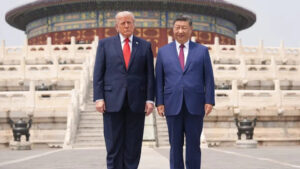
Takaichi’s foreign policy stance is also fraught with questions. Riding a wave of nationalist support over her early, unyielding stance on China, she has less room for political manoeuvre domestically — even if so inclined — to recalibrate the relationship with Japan’s big neighbour. Her embrace of Donald Trump and his endorsement of her election is less important than where she lands on Japan’s security strategy.
The region looks to Japan’s role as a stabilising force in regional politics and a more attractive counterweight than the United States to China’s dominance. More open talk of Japan’s re-militarisation and even consideration of Japan’s nuclear options are a context in which Takaichi’s hawkish inclinations could flourish politically. Suggestions that she might revisit the sensitive constitutional question of the ‘pacificist’ Article 9 of Japan’s constitution, however, should be viewed with scepticism. The practical constitutional barriers to change are formidable and the diplomatic hurdles high.
The dilemma for Takaichi is that she might jeopardise her nationalist support base should she move too cautiously in international security affairs. But a Japan that renounced Article 9 of its constitution and moved decisively toward rearmament would cause anxiety among its neighbours. Even Australia, Japan’s de facto Western Pacific ally and an increasingly intimate security partner, is hardly prepared to contemplate the consequences of that kind of shift in Japan’s security posture. And such a shift would empower the Chinese narrative about how Japan’s latent militarism undermines political stability in Asia.
Read more by EAF editors The Australian National University
The EAF Editorial Board is located in the Crawford School of Public Policy, College of Law, Policy and Governance, The Australian National University.