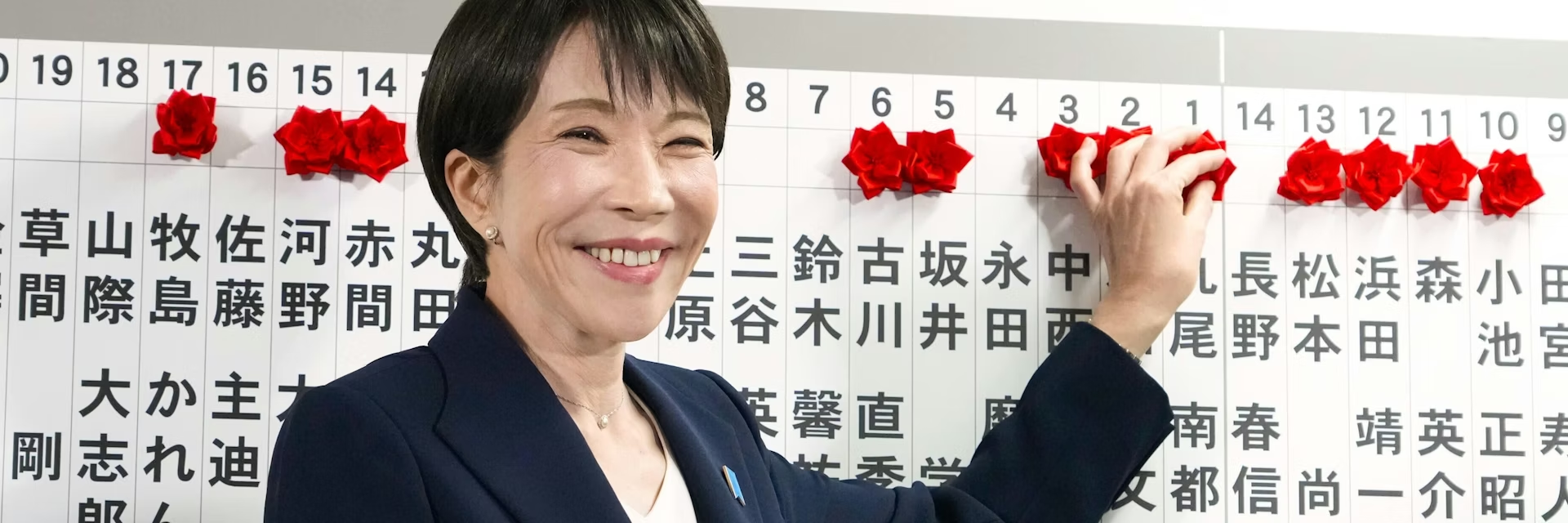
Japanese Prime Minister Sanae Takaichi has delivered her Liberal Democratic Party (LDP) a landslide victory in the parliamentary elections she called shortly after taking office.
Now that she has consolidated her power in Japan’s legislature (called the Diet), the big question is what she will do with it.
Since her ascent to the prime ministership in a parliamentary vote in October, the ultra conservative Takaichi has upended the normally staid Japanese political system.
She has connected with younger voters like no other Japanese leader in recent history with her savvy social media presence, iconic fashion sense and diplomatic flair. (In a literal rock-star moment, she showed off her drumming skills in a jam session with South Korea’s leader.) Takaichi has cannily taken advantage of the honeymoon phase of her leadership by calling a snap election to gain more power in the Diet before there’s a dip in her popularity.
However, voters will now expect to see a return on their investment, and Takaichi faces the much more daunting task of delivering on her promises. Improving living standards in a country with a rapidly shrinking workforce and ageing population without mass immigration will test her political skills much more than winning an election.
An unlikely election victory
Although Takaichi’s LDP has been in government for most of Japan’s post-war history, it has recently experienced a string of poor election results.
In 2024, it lost the lower house majority it held with its then-coalition partner, Komeito, after a series of corruption scandals. Then, last year, the coalition lost its majority in the upper house, leaving the government hanging by a thread.
The party began its remarkable turnaround following then-Prime Minister Shigeru Ishiba’s resignation in September in the wake of those electoral setbacks.
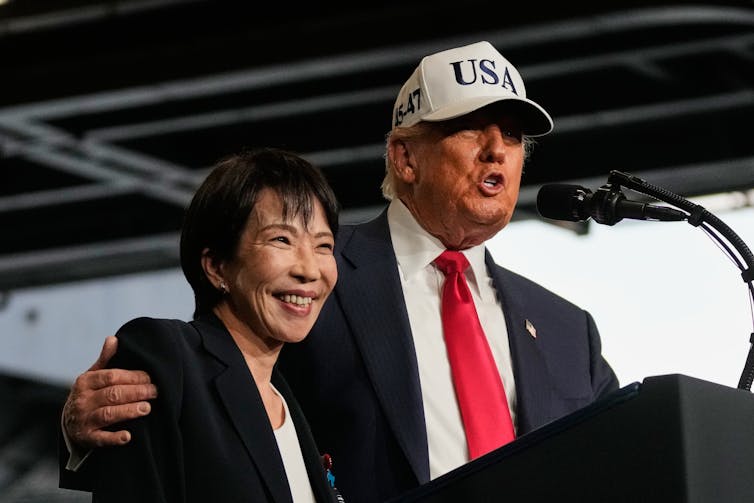
Many pre-election polls predicted a sizeable victory for the LDP and its new coalition partner, Nippon Ishin (the Japan Innovation Party). Takaichi also received a boost with an endorsement from US President Donald Trump. Although the Japanese public views Trump unfavourably, they also know the US is their ultimate security guarantor against China, in addition to Japan’s largest export destination.
Nevertheless, there were some doubts about whether Takaichi’s popularity, particularly among younger voters, would translate into votes.
In the end, her electoral gold dust rubbed off on the rest of her party. Despite freezing temperatures and record snow in places, the LDP has been comfortably returned to office with a vastly increased majority in the lower house. The coalition now has a two-thirds super-majority, which means she can override the upper house to push through her legislative agenda.
A more assertive posture on China?
Since becoming prime minister, the hawkish Takaichi has taken an assertive position towards China.
In November, she angered Beijing by saying Japan could intervene militarily to help protect Taiwan in the face of a potential Chinese invasion. This resulted in vicious Chinese attacks on Takaichi that continued into the new year.
While the Japanese public is divided over whether to come to Taiwan’s aid in any conflict with China, there is now strong support for Takaichi’s pledge to increase the defence budget to 2% of GDP by this March, two years ahead of schedule.
In December, the Cabinet approved a 9.4% increase in defence spending to achieve this objective, focusing on domestic production and advanced capabilities (cyber, space, long-range strikes).
In response to rising threats from China, North Korea and Russia, Takaichi’s government also plans to revise Japan’s core security and defence strategies this year.